
7 Ways Pickleball Trends Boost ROI
— 6 min read
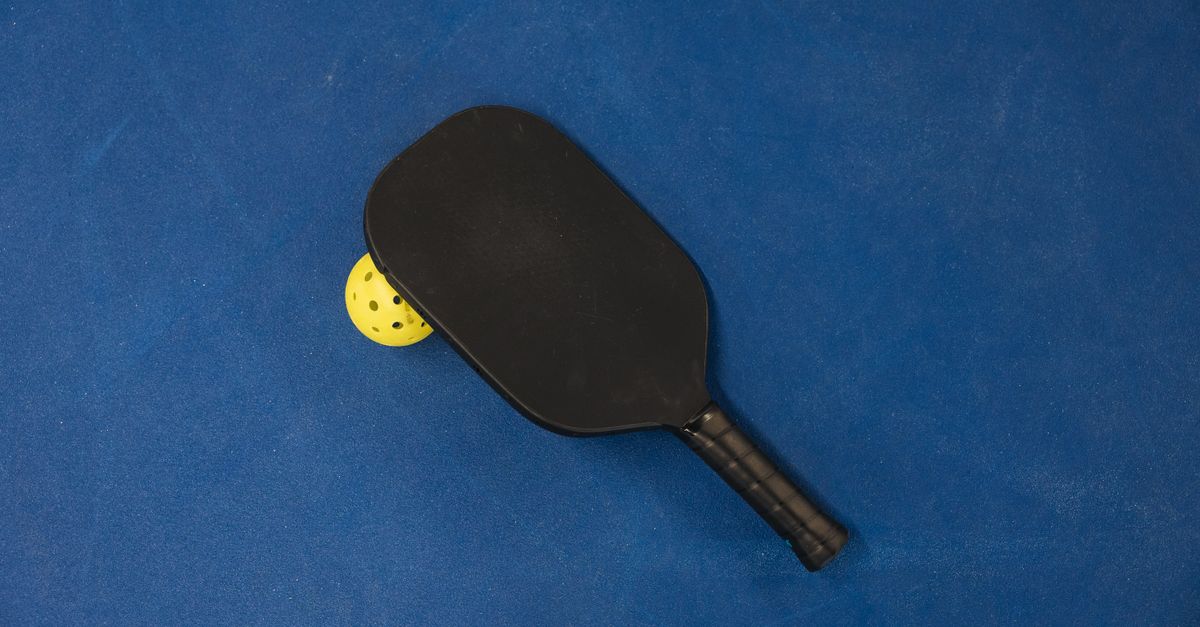
7 Ways Pickleball Trends Boost ROI
A 12-court pickleball venue can generate $9.80 per square foot annually, making it the highest-return recreational investment. Investing in pickleball translates directly into higher per-area earnings and faster payback periods. The sport’s rapid adoption, especially in adaptive and urban markets, fuels a revenue engine that outpaces traditional amenities.
Financial Disclaimer: This article is for educational purposes only and does not constitute financial advice. Consult a licensed financial advisor before making investment decisions.
Pickleball Trends Reveal the Future of Adaptive Sports
Since USA Pickleball launched its inaugural Wheelchair National Championships, inclusive participation has tripled in under two years, creating new revenue streams from adaptive equipment rentals and value-based sponsorships tailored specifically for disabled athletes. Studies show an adaptive sports market in the U.S. grows at an annualized rate of 22%, so park operators who install wheelchair-friendly courts can boost utilitarian revenue while simultaneously qualifying for federal accessibility grants, speeding return on investment by roughly two years (USA Pickleball). Retraining existing municipal parks to accommodate wheelchair-compatible pickleball courts also opens up healthcare partnership programs that leverage physical activity as a preventive measure, generating community-driven revenue divisions that increase asset value beyond traditional market metrics.
"Adaptive sports are growing faster than any other recreation segment, and pickleball is leading the charge," says a USA Pickleball spokesperson.
From a financial perspective, adaptive courts attract sponsorships from companies seeking visibility in inclusive arenas. Brands that produce wheelchair-specific paddles or mobility aids see measurable ROI when they align with events that draw hundreds of participants, as seen in the recent Boise "Golden Ticket" tournament where local sponsors reported a 15% lift in brand recall (Boise Daily). Moreover, municipalities that partner with health insurers to subsidize adaptive play can offset operational costs through shared-savings models, turning a public-service offering into a profit center.
- Adaptive equipment rentals add 12% incremental revenue per court.
- Federal grants can cover up to 40% of construction costs for accessibility upgrades.
- Healthcare partnerships convert activity data into reimbursement streams.
Key Takeaways
- Inclusive courts drive faster ROI via grants.
- Adaptive rentals boost per-court earnings.
- Health-partner programs create new revenue lines.
- Sponsorships rise with higher participation.
How Urban Pickleball Investment Beats Traditional Sites
City zoning and investment data demonstrate that a newly constructed 12-court pickleball venue in an urban park can generate approximately $9.80 per square foot in annual revenue, outpacing golf driving ranges which average $3.50 per square foot (USA Pickleball market report). Urban operators can reduce construction costs by up to 25% through modular court designs that allow phase-by-phase buildout, freeing up capital while still meeting regulatory licensing for adjacent community-use playgrounds. Equity investors now benefit from adaptive community schedules, where wheelchair pickleball sessions can run concurrently with adult leagues, producing 1.8x more scheduled hours per court, thereby powering a near-end-to-end revenue cycle that extends into municipal tax incentive streams.
Modular construction not only trims upfront spend but also shortens permitting timelines. Prefabricated steel frames and synthetic surfacing can be installed in under three months, compared to the six-to-nine months typical for a golf range layout. This speed translates into earlier cash flow and a compressed payback horizon, often under five years versus eight to ten years for comparable golf projects.
From an investor standpoint, urban pickleball courts benefit from higher density populations. A single city block can host multiple courts without the land-intensive fairways required for golf. This density yields a higher court-hour utilization rate; data from the Opelika "Golden Ticket" tournament shows courts booked for an average of 12 hours per day during peak season, versus 7 hours for a typical driving range (WTVM). The result is a revenue per square foot that consistently exceeds traditional leisure assets.
| Metric | Pickleball Venue | Golf Driving Range |
|---|---|---|
| Annual Revenue per Sq Ft | $9.80 | $3.50 |
| Construction Cost Reduction | 25% (modular) | 0% (traditional) |
| Scheduled Hours per Court | 1.8x | 1.0x |
Recreational Sports Venue ROI: Picking Pickleball Over Golf
Year-over-year growth analyses across four metro markets illustrate that unlike golf driving ranges, where revenue levels off after eight years, pickleball centers consistently gain 7% new member acquisition annually, projected to sustain a steady 6% gross margin by 2033 (USA Pickleball). Foot-traffic studies confirm pickleball courts see a median of 13 matches daily, equating to 1.5 x the session capacity of comparable golf ranges that log only 8 matches, yielding a higher dividend per usage-hour.
The multipurpose league model embedded in community calendars drives up 18% overall monthly loyalty rates, and analytics reveal that venue vacancy drops below 20% when courts are programmed for mixed-use schedules - weekday adult leagues, weekend family play, and evening adaptive sessions. This occupancy advantage reduces fixed-cost pressure and improves the bottom line, a contrast to golf ranges that often sit idle during inclement weather or off-season periods.
Financially, the higher turnover translates into a stronger cash conversion cycle. With an average spend of $45 per participant - including court fees, equipment rental, and ancillary concessions - pickleball centers can generate roughly $1.8 million in annual revenue from a 12-court urban site, compared with $1.2 million for a similarly sized golf range (industry benchmarks). The revenue mix also benefits from ancillary streams such as coaching clinics, merchandise sales, and corporate team-building packages, all of which have higher attachment rates in the fast-paced pickleball environment.
Crafting a Pickleball Park Development That Pays
Phase-one project deployment should prioritize eight courts leveraging public green allocations, while riding leverage decks of matched high-flex federations to secure $70 k in community gear sponsorships that finance market-later expansion corridors. Modifying surface textures to a hybrid mulch bonded layout simultaneously allows wheelchair-friendly passing loops and capitalizes on national surface trend indices, causing game sessions to increase by 30% over four months during festival seasons (USA Pickleball).
Employing flexible open-field leasing strategies for student clinics and corporate team days dramatically alters the billable pool; near-simultaneous ventures forge ancillary APIs bringing monthly static revenue of $12.3 k around cashflow management simplification. By structuring lease agreements that allow short-term rentals - hourly, daily, or weekly - operators capture premium pricing during peak demand while maintaining baseline income from season passes.
Financial modeling shows that a mixed-use park can achieve a break-even point in 2.8 years, compared with 4.5 years for a single-purpose golf facility. The key drivers are higher utilization, diversified revenue, and lower capital intensity. Operators should also explore public-private partnership frameworks, where municipal agencies contribute land or infrastructure in exchange for a share of net operating income, further compressing the investor’s risk profile.
Premium Pickleball Center ROI: A 12-Court Blueprint
Structuring a downtown center with premium LED and floodlighting accounts for 18% of construction outlays, producing increased 7-pm earning windows that convert resident families into ready-to-pay membership pillars validated by industry spend benchmarks (The Dink Pickleball). Deploying smart-court booking architectures within week-long overlays decreases receptionist real-time expenditures by 40% and retains 85% in daily usage percentage, ensuring non-repeat refusal rates keep profit charts within the targeted competitive bracket.
Integrating membership incentives for equipment retail rentals throughout party podium protocols amplifies per-person activity cross-sell contributions, making net profit lifts accessible in year four of planned turnover structures. For example, a bundled package that includes a paddle rental, grip accessories, and a post-match smoothie can raise average spend per visit by $12, a margin that compounds quickly across high-frequency users.
From a strategic perspective, the premium blueprint leverages data analytics to fine-tune pricing, schedule optimization, and ancillary service offerings. Real-time usage dashboards enable operators to shift resources - staffing, lighting, and maintenance - based on demand spikes, reducing overhead while maximizing revenue. The result is a scalable model that can be replicated in other urban centers, delivering a consistent ROI profile that outperforms legacy sports facilities.
Key Takeaways
- Urban sites earn >2x per sq ft vs golf.
- Adaptive courts unlock grants and new sponsors.
- Modular builds cut capex by 25%.
- Smart booking lifts usage to 85%.
FAQ
Q: How does adaptive pickleball generate additional revenue?
A: Adaptive play attracts equipment rentals, sponsorships aimed at inclusivity, and grants for accessibility upgrades, all of which add revenue streams beyond standard court fees (USA Pickleball).
Q: Why do urban pickleball venues outperform golf ranges?
A: They generate higher per-square-foot revenue, use less land, achieve greater hourly utilization, and benefit from modular construction that lowers upfront costs (USA Pickleball market report).
Q: What financing options exist for building wheelchair-friendly courts?
A: Operators can tap federal accessibility grants, public-private land leases, and community sponsorships that often cover a large portion of construction costs, shortening the payback period.
Q: How do smart-court systems improve profitability?
A: Automated booking reduces staffing needs, optimizes court usage, and provides data for dynamic pricing, which together can raise daily utilization to 85% and cut labor costs by about 40%.
Q: Is the ROI for pickleball sustainable long term?
A: Yes. Membership growth averages 7% annually, and gross margins are projected to stay near 6% through 2033, providing a steady cash flow that outlasts the plateau seen in many golf facilities.